1828 25C Browning 1 MS(PCGS#38976)
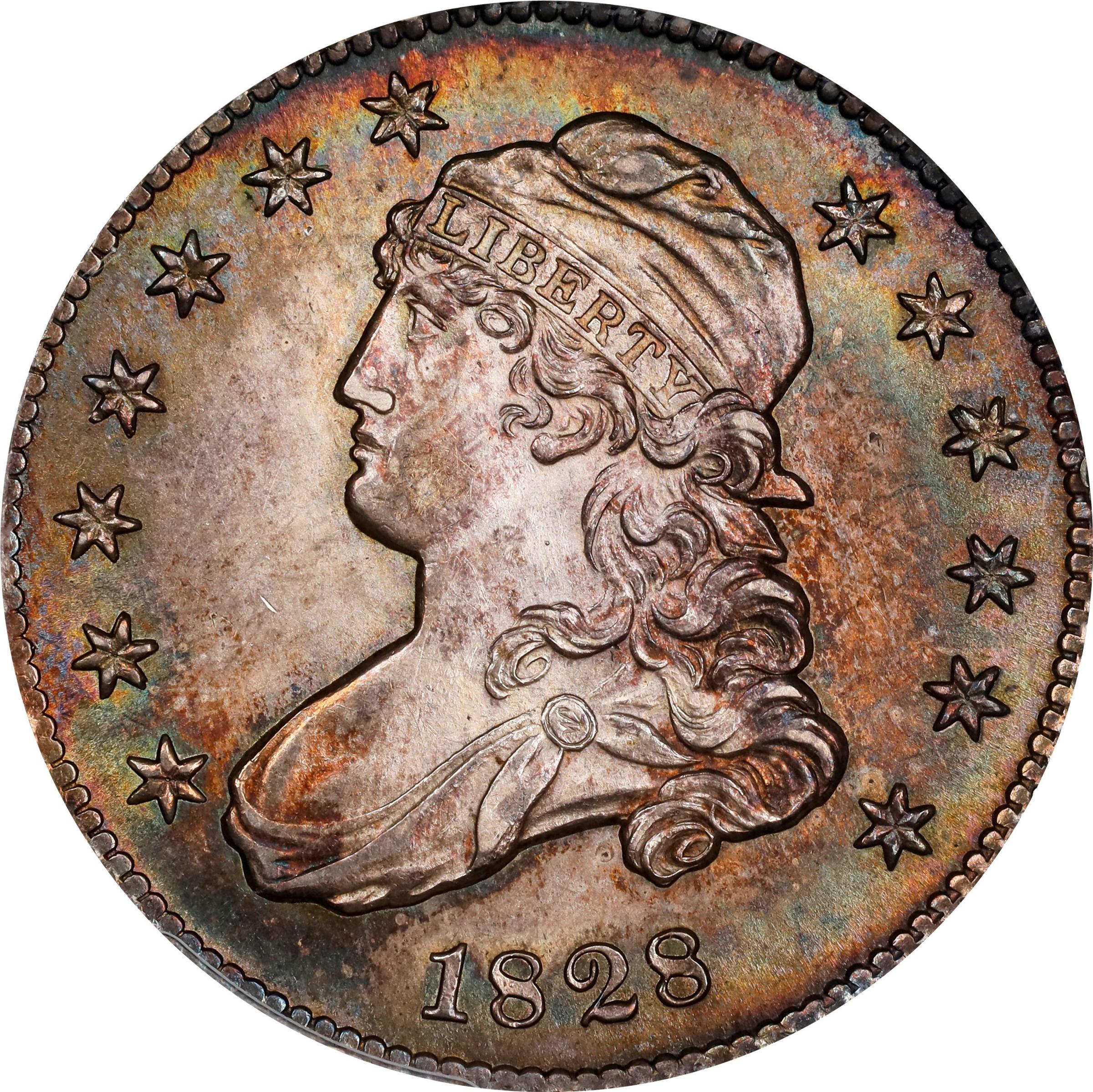
1828 25C Browning 1 MS (PCGS#38976)
Summer 2025 Global Showcase Auction U.S. Coins
- Commissaire-priseur
- Stack's Bowers
- Numéro du lot
- 3045
- Grade
- MS65
- Prix
- 36 000
- Description du lot
- Tompkins Die Stage 1/2, Rea et al. Die State P. A colorful and boldly lustrous example, this Gem displays rich autumnal deep gold and amber tones enlivened by contrasting pastels of rose and blue around mostly brilliant centers. It is a simply beautiful coin, boasting rarely encountered luster on both sides. Some highly localized areas of striking softness are noted, such as Liberty's nostril, the tops of the wings, and the letters PLU on the reverse banner. The banner shows full letter definition, sharper in that area than other examples of the variety seen. A glass reveals some trivial hairlines in isolated areas, and a thin curved scratch under the tip of the eagle's beak remains well hidden even under scrutiny. An exceptional piece, definitively trailing only the Eliasberg coin among the finest survivors from these dies.<p>With the introduction of the close collar, a tool that surrounded the edge of the planchet and imbued its edge device at the moment of coining, the need to redesign the quarter became evident. The next quarter issue after 1828 would introduce a smaller, thicker module, more refined and regular in appearance. The close collar could apply the edge reeding at the same instant the coin was struck, thereby saving the step of running unstruck planchets through the Castaing machine, also known as the edge mill, in order to put edge devices on precious metal coins.<p>Thus, the 1828 represents the end of an era in the design and production American quarter dollars. Just four die varieties were used to produce either 102,000 or 106,000 coins bearing this date, of which nearly all were spent instantly. Most of the Spanish colonial 2 reales that had been common in American pockets for generations were worn out, as the numbers of these coins struck by the newly independent republics of Latin America were lower than before. In 1830, several banks in New York announced they had "resolved to receive and pay Spanish quarters of a dollar at twenty-four cents and adding, by way of explanation of the measure, that the Director of the Mint had declared their real value to be only 23 1/2 cents," according to a piece that made the rounds through the nation's newspapers at the time. A preference for American fractional silver coins over the still-current types from the former Spanish colonies began to take shape, and our own quarters saw greater and greater circulation as the march continued toward foreign coins disappearing from circulation altogether. By autumn 1859, such foreign coins would no longer be legal tender. Another decade later, in most places outside of the American West, they were encountered only occasionally.<p>In spite of this great demand for American quarter dollars, the occasional coin like this survived somewhat miraculously. There are very, very few like it.