1830 $5 MS(PCGS#8152)
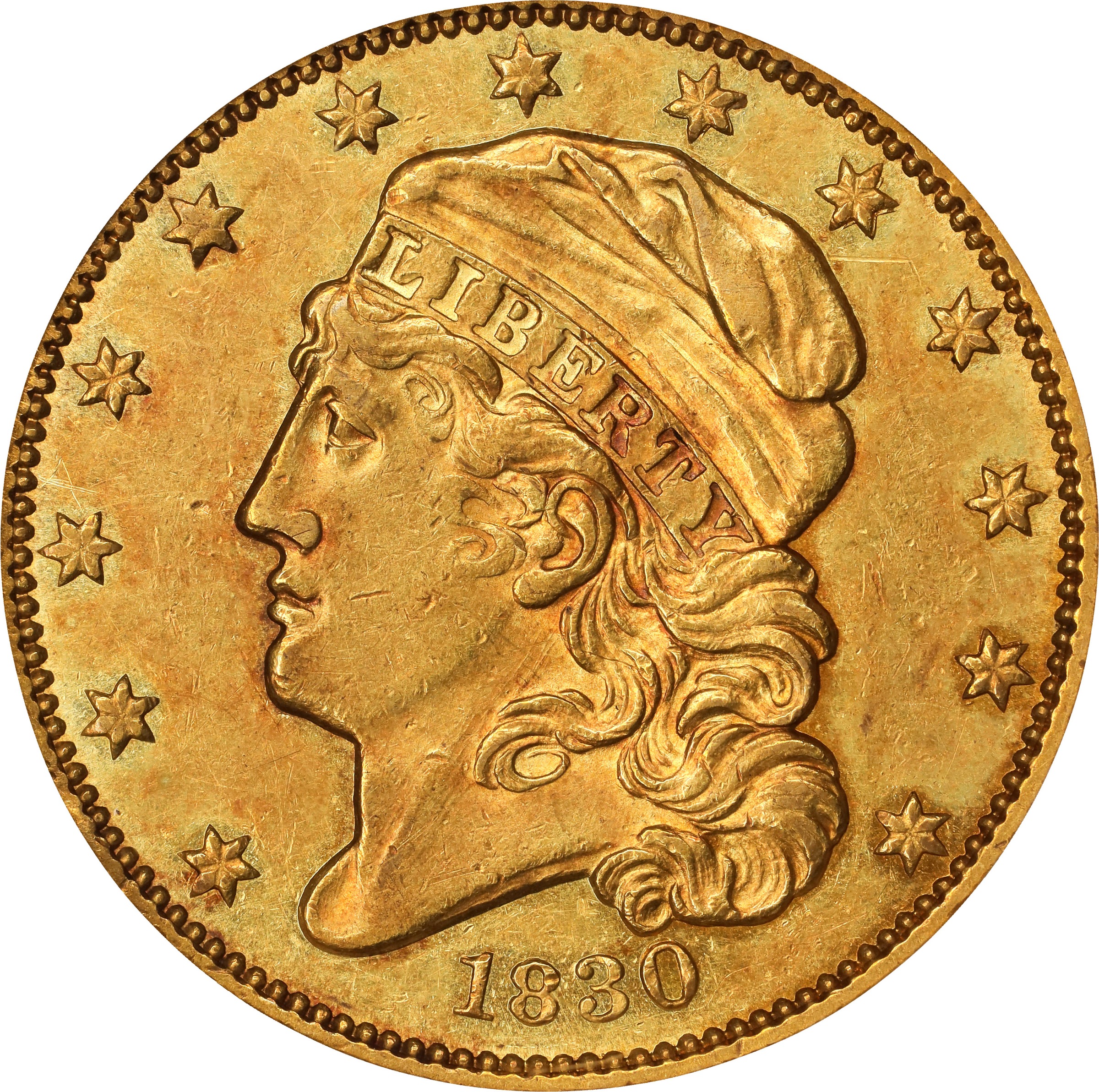
1830 $5 MS (PCGS#8152)
Summer 2026 Global Showcase Auction U.S. Coins
- Auktionator
- Stack's Bowers
- Losnummer
- 2320
- Erhaltungsgrad
- AU58
- Preis
- 67.100
- Losbeschreibung
- BD Die State a/b. A vivid Choice AU example of this highly elusive early half eagle type. Bathed in rich rose-gold and honey-orange, the surfaces reveal traces of frosty to semi-reflective luster that are most pronounced in the protected areas around the design elements. While a bit lightly struck at isolated high points of the central devices and also on a few of the obverse stars, the overall definition is suitably bold at the assigned grade level. A touch of glossiness and some muting to the surfaces are noted for accuracy, but there are no sizable or otherwise singularly distracting marks.<p>In 1829, the Philadelphia Mint obtained a new Rush Muhlenberg coining press that would allow for a high raised rim on coins, which had the dual effect of not only extending circulation life but also served to protect the design from the normal rigors of daily commercial use. Chief Engraver William Kneass replaced the long-tooth dentils on pervious issues with finely beaded or rounded dentils, all of which are now noticeably smaller and more regular in diameter. The new press helped the Mint produce the entire mintage of 126,351 half eagles struck in 1830 with only two die pairings that shared a common obverse. The two reverses are most easily distinguished by examining the denomination indicator; the D is significantly smaller on the BD-2 variety than on the BD-1 pairing, as here. The Large D reverse was originally employed on the 1829 BD-2 small diameter half eagles then again in 1830. The die emission sequence of the two 1830-dated varieties is not clear. Based on die state analysis, it appears that the two reverse dies were used alternately to produce the five batches of half eagles delivered on March 31, May 20, June 30, September 30, and December 31. Likely the coiner simply grabbed the sole 1830-dated obverse and whichever reverse die was handy at the time to fulfill the order. The two varieties are roughly comparable in rarity; Bass and Dannreuther note that 25 to 35 Large D BD-1 specimens likely exist compared to some 30 to 40 of the Small D BD-2 variety. Given the rarity of the Capped Head Left half eagle as a type, this minimally circulated 1830 BD-1 has much to offer early gold specialists.