1815 25C "E" MS(PCGS#785444)
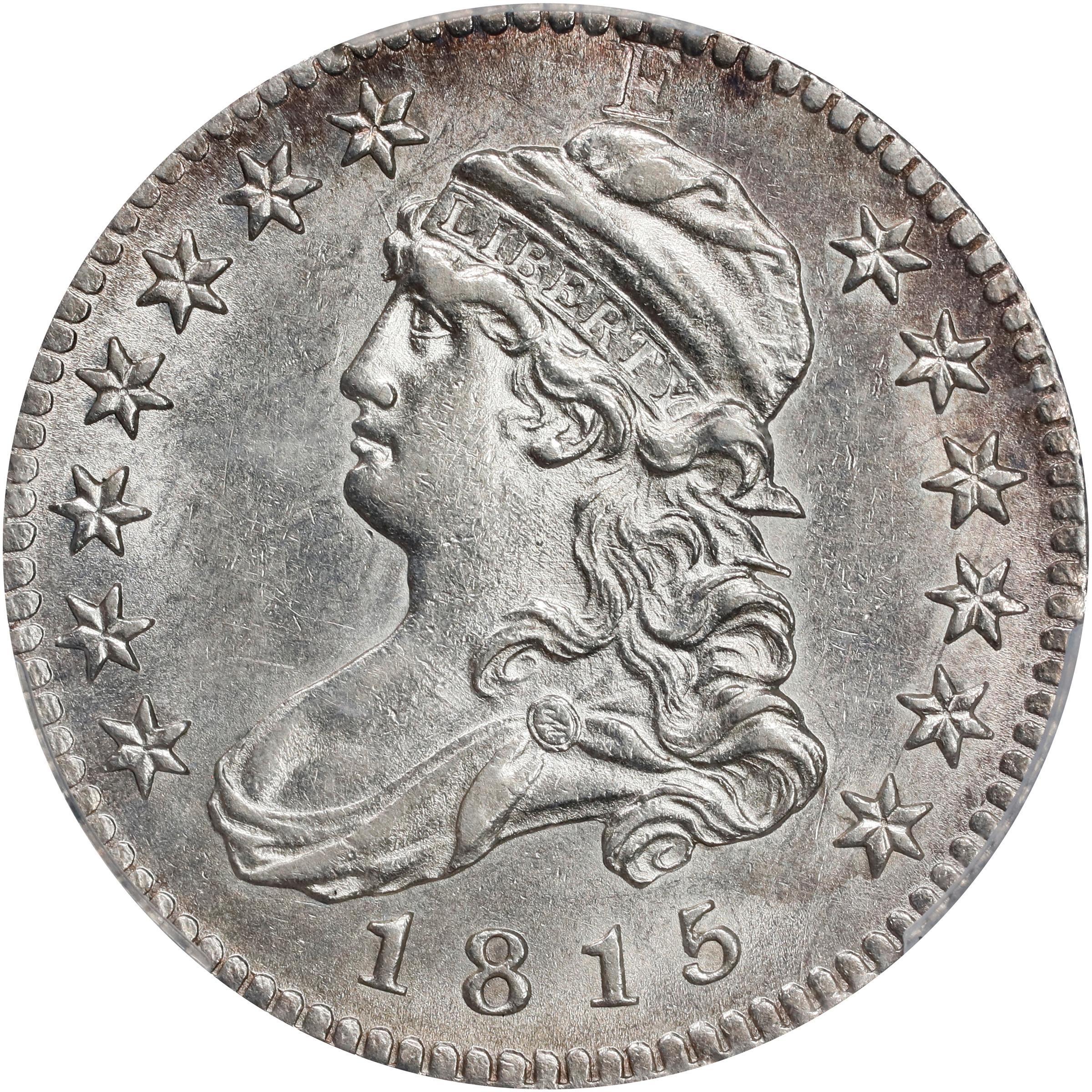
1815 25C "E" MS (PCGS#785444)
Summer 2025 Global Showcase Auction U.S. Coins
- Auctioneer
- Stack's Bowers
- Lot Number
- 4236
- Grade
- AU58
- Price
- 5,160
- Lot Description
- Tompkins Die Stage 1/1, Rea et al. Die State P. A flashy and attractive Choice AU example of this intriguing variety of the 1815-dated quarter issue. Both sides retain abundant frosty to semi-reflective luster, the surfaces brilliant apart from delicate champagne-apricot iridescence here and there around the peripheries. A touch of glossiness to the texture is noted for accuracy, as is a faint hairline on Liberty's cheek and neck, but there are no sizeable or otherwise mentionable marks. The detail is nearly full from an expert strike.<p>Although a number of seemingly logical and often well researched theories have been put forth in the <em>John Reich Journal</em> and other publications to explain the existence of the E and L countermarks on certain Capped Bust quarters dated 1815 and 1825, no definitive proof as to why these letters were added has ever been discovered. The coins themselves seem to offer no clues as to their special additional letter, as coins without any such countermarks have no variation between the weight, edge reeding or die alignment when compared with those quarters that do have an E or L stamped above Liberty's cap. For many years some theorists believed these letters were added at the Mint as most coins barely show any deformation on the reverse in the area opposite the countermark, as here, although some examples do show evidence of the impact of the punch. The latter observation has finally put to pasture the theory that these countermarked quarters were created while still resting on the reverse die at the Mint. An excellent summary of these theories is included in the appendix of <em>Early Quarter Dollars Of The United States Mint: 1796-1838</em> (2010) by Rea et al.<p>Some collectors endeavor to obtain one of each of the four known combinations, the E and L countermark on the 1815 quarters as well as the same two countermarks on the 1825 quarters. Most seen are in fairly high grade, as here, so if these were issued as some official commemoration, they were apparently saved and did not circulate extensively. It is indeed remarkable that, despite considerable effort and research by a number of highly talented numismatists, no individual has yet found any historical reference as to why these were produced or what they signify. They were first reported when offered for sale in the early 1880s.<p><strong>Steve M. Tompkins Commentary:</strong> Ah, the E and L Counterstamps...if only we knew the full story of their creation and purpose. Hopefully someone will eventually find the answers to all the questions posed by this mystery. In the meantime I continue to gather information and document examples of these enigmatic coins.