1836 $1 J-60 Original, Alignment I PR(PCGS#11225)
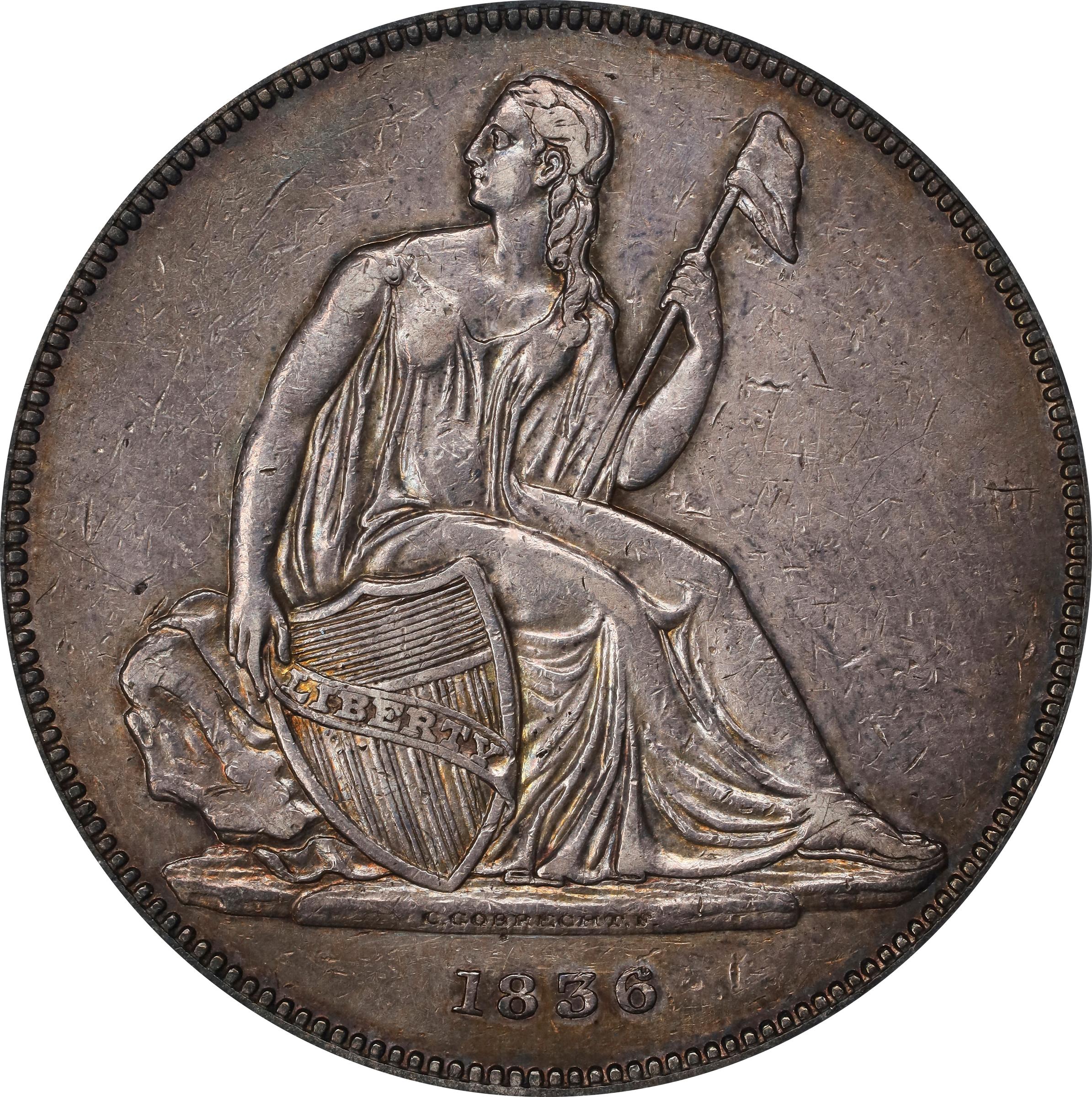
1836 $1 J-60 Original, Alignment I PR (PCGS#11225)
November 2025 Showcase Auction U.S. Coins
- Auctioneer
- Stack's Bowers
- Lot Number
- 2123
- Grade
- PR50
- Price
- 16,800
- Lot Description
- DTS Die State B. An obvious original striking of this Judd number, this Gobrecht dollar saw light commercial use before being preserved for future generations. Trivial high point rub hardly detracts from design elements that remain sharp in most areas. Ample remnants of the satin to semi-reflective finish for which this issue is known are readily appreciable as the coin rotates under a light. Lightly toned in sandy-gold and olive-russet, wispy hairlines and other faint marks are noted, but none are unduly distracting during in-hand viewing.<p>Numismatic scholars recognize four different die alignments for Gobrecht dollars, designated as I (coin turn, eagle flying upwards), II (medal turn, eagle flying upwards), III (coin turn, eagle flying level with respect to obverse), and IV (medal turn, eagle flying level with respect to obverse). When Walter Breen wrote his <em>Complete Encyclopedia</em> in 1988, he considered Die Alignment I examples of the Judd-60 Name on Base issue to be originals from 1836 and Die Alignment II pieces from a mintage of 600 pieces delivered in March of 1837. He regarded Die Alignment III and IV pieces as restrikes. This view had been challenged by the early 1990s, when it was found that many Die Alignment IV pieces evinced signs of circulation, suggesting that they had been made for that purpose rather than to accommodate coin collectors. Modern research by Craig Sholley, John Dannreuther, and Saul Teichman (based on an exhaustive examination of die state evidence), reported that the die alignment sequence of Judd-60 Gobrecht dollars is actually I-IV-II-IV-I-IV. All examples in these alignments are originals attributed to the December 1836 issue of 1,000 coins; the 600 pieces struck in March 1837 represent a test striking, and all were subsequently melted. Die alignment III pieces are still regarded as restrikes coined decades later than 1836. Pollock in his <em>United States Patterns and Related Issues</em> considered Die Alignment II and III pieces as the scarcest alignment varieties, followed by IV. He regarded Die Alignment I pieces to be the most readily available.