1800 H10C LM-3, Libekty MS(PCGS#38603)
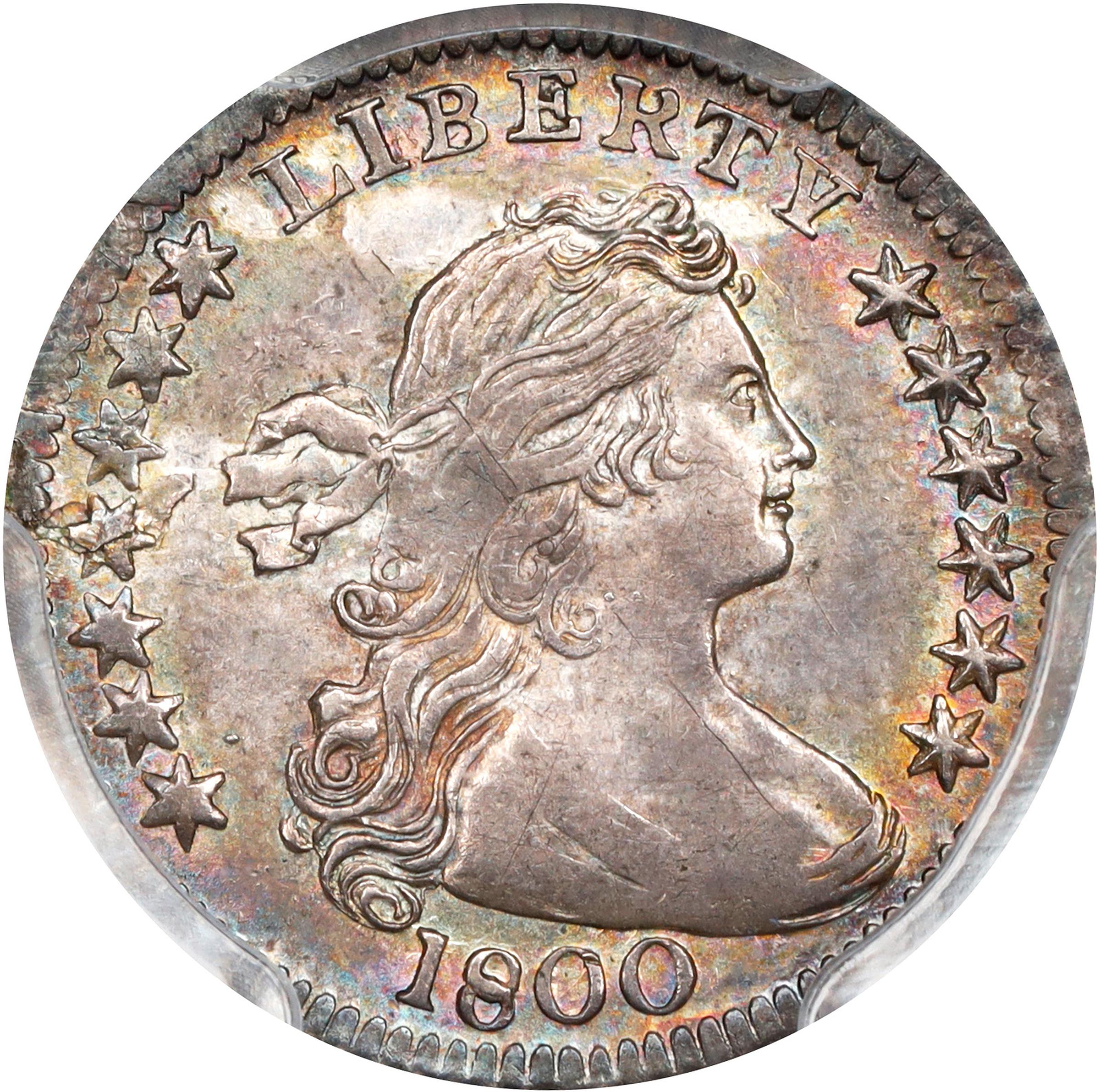
1800 H10C LM-3, Libekty MS (PCGS#38603)
Summer 2025 Global Showcase Auction U.S. Coins
- Auctioneer
- Stack's Bowers
- Lot Number
- 3027
- Grade
- MS63+
- Price
- 22,800
- Lot Description
- An absolutely stunning Mint State example of this popular <em>Guide Book</em> variety of the 1800 half dime, nearly Choice and with outstanding eye appeal. Warm pearl gray patina with a tinge of olive, the surfaces also exhibit blended blue, pink and gold iridescence that is bolder and more extensive on the reverse. That side of the coin is rotated approximately 30 degrees counterclockwise from normal coin alignment. The strike is well centered, the detail typically soft at Liberty's bust and in the opposite area at upper right reverse, centers on both sides also somewhat indistinct due to die swell, but in other areas we note pleasingly bold detail. A very minor planchet flaw (as made) engages star 4 on the obverse and continues onto the border, but the surfaces are otherwise smooth with no post-production blemishes of note. With much satin luster in evidence and strong eye appeal, CAC approval is fully justified here and, as above, a Mint State-64 grade is nearly so.<p>After a hiatus in 1798 and 1799, when no half dimes were struck, the Mint resumed production of this denomination in 1800. During the years leading up to the turn of the 19th century, Chief Engraver Robert Scot's Heraldic Eagle reverse design (copied from the Great Seal of the United States) had been introduced to more and more of the United States' silver and gold denominations. Its first use was in 1796 on the quarter eagle, followed by the eagle in 1797 and the dime, silver dollar and half eagle in 1798. Next came the half dime in 1800, with the half dollar and quarter the last to make the change in 1801 and 1804, respectively. Gaps in production, as with the half dime in 1798 and 1799, explain why it took the Mint so long to standardize the design of all of the silver and gold denominations around the Heraldic Eagle reverse, but by 1804 the transition was complete. The obverse remained the Draped Bust motif, enduring on the silver coins until John Reich's Capped Bust design made its first appearance in 1807.<p>As the half dime was not a popular denomination with early depositors of silver bullion, after 1805 no more examples were struck until 1829. As well, no 1804-dated half dimes were produced. Comprising just five dates, the Draped Bust, Heraldic Eagle half dime is one of the shortest series in all of U.S. numismatics. Not surprisingly, it is also one of the most challenging types to collect in even the lowest Mint State grades. Most such pieces seem to have survived as a matter of chance, although a few of the very finest survivors may have been used for presentation to important visitors or other special persons with connections to the early Mint. The survival of an early half dime with the quality and eye appeal of the present example is an extremely rare occurrence, and this represents a significant bidding opportunity for the connoisseur.