1861 $2.50 Clark, Gruber & Co. MS(PCGS#10139)
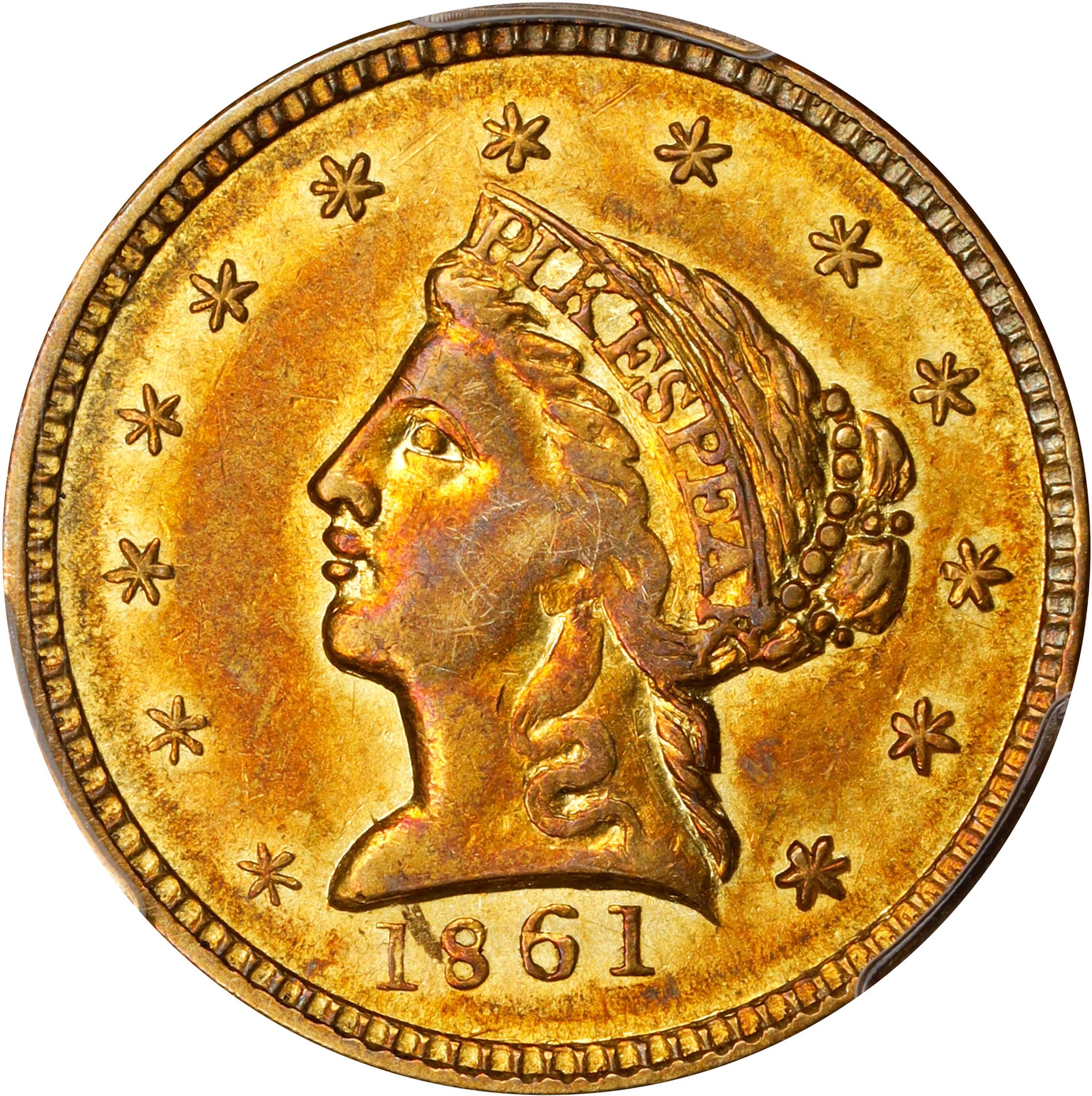
1861 $2.50 Clark, Gruber & Co. MS (PCGS#10139)
Summer 2025 Global Showcase Auction U.S. Coins
- Auctioneer
- Stack's Bowers
- Lot Number
- 3496
- Grade
- AU58
- Price
- 31,200
- Lot Description
- A most memorable example of this scarce and popular Territorial gold issue. While sometimes encountered in the marketplace and in auction, most Clark, Gruber & Co pieces have been subjected to all manner of "conservation" brightening the surfaces in hopes of attaining a higher certified grade. This piece has not been. Both sides are richly toned in gorgeous coppery-orange gold with rose and powder blue highlights. The devices are well defined save for at the typically blunt central features. This is an ideal specimen of this issue, one that will be enjoyed, not just for its place in history, but for its stunning good looks.<p>In 1857, gold was discovered in Colorado sparking a new gold rush. In Leavenworth, Kansas, brothers Austin and Milton Clark and merchant Emmanuel Gruber each started out provisioning Colorado-bound miners. Hearing tales from returning prospectors about the difficulties in conducting trade with gold dust, they realized that a profitable enterprise could be had providing banking and assay services in the gold fields. In early 1860 they formed Clark, Gruber & Company as a bank, assay office and mint. While Milton Clark obtained dies and equipment in Philadelphia and New York, his partners headed to Denver to establish their office and mint. On July 5, they began striking coins in $2.50, $5, $10, and $20 denominations made of gold dust of high purity. The coins were quickly accepted by the miners and soon Clark, Gruber & Co. became the most prolific of the Colorado coiners. The gold alloy initially used proved to be soft and prone to wear. In 1861, they added a higher concentration of silver to the alloy, still ensuring that the total gold content was roughly 1% higher than their federal equivalents. Clark, Gruber & Co. coined just under $600,000 face value by the time they ceased their minting operation in 1862. In April of 1863 the partners sold their facility and equipment to the government who then used it as an assay office for the next 43 years before building a full-fledged branch mint that opened in 1906.<p>