1922 $1 High Relief, J-2020 PR(PCGS#97384)
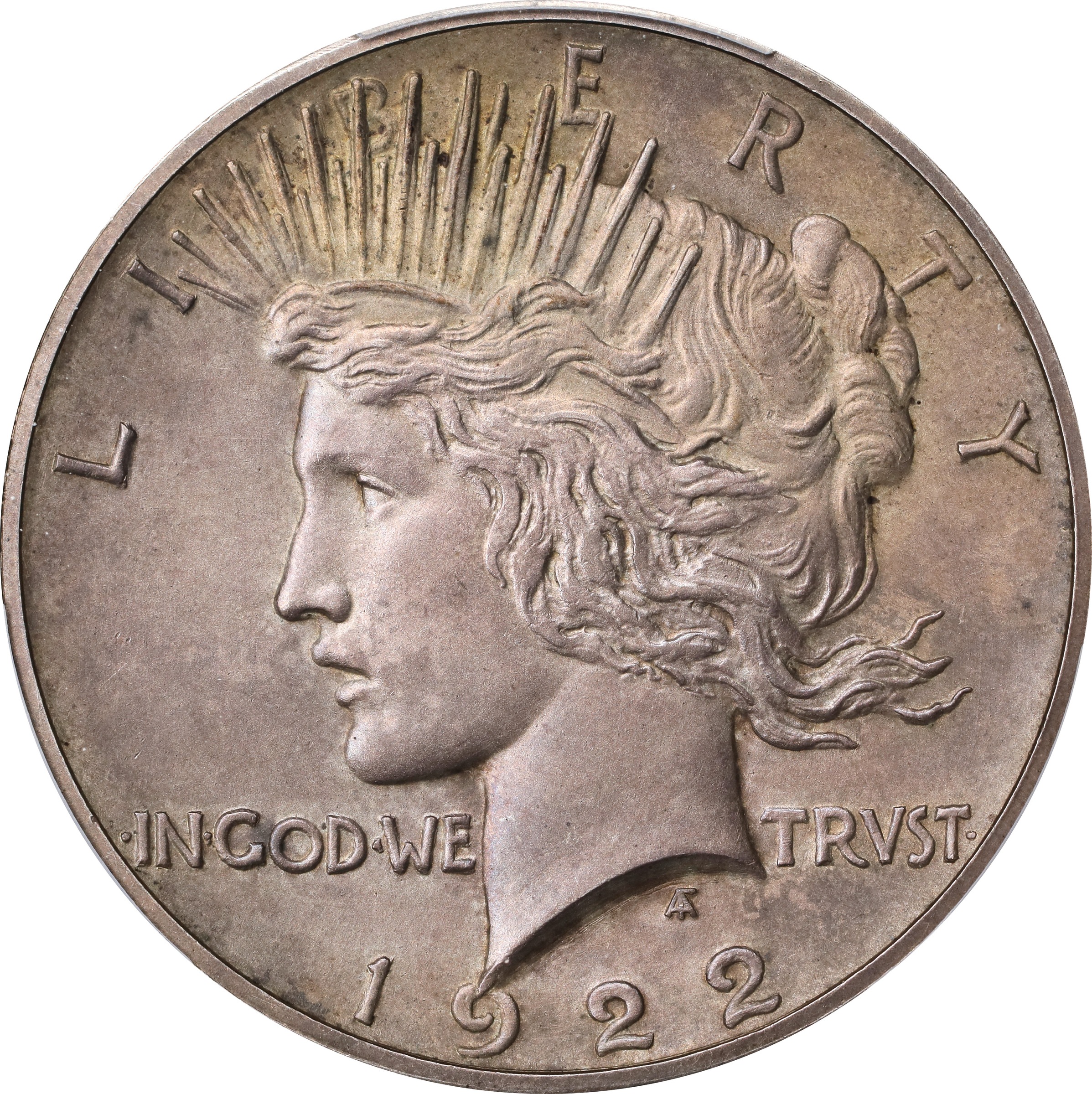
1922 $1 High Relief, J-2020 PR (PCGS#97384)
Spring 2026 Showcase Auction U.S. Coins
- Auctioneer
- Stack's Bowers
- Lot Number
- 3089
- Grade
- PR63
- Price
- 252,000
- Lot Description
- According to the in-depth research on the subject by Roger Burdette, almost immediately after coining of the 1921 Peace dollars commenced in the final few days of the year, George Morgan set to work on the Peace dollar hubs. His initial endeavor was to make small improvements to the 1921 high relief reverse hub and to alter the date on the obverse to 1922. As soon as the initial trials for 1922 began, likely January 5th, a sample from the slightly modified dies was collected and sent with an example of the 1921 coinage to Mint Director Baker. In short order, it became clear that continuation of the high relief format was simply untenable and that something drastic had to be done to make the designs work better, while maintaining their design integrity as best as possible. George Morgan knew that, as in the case of the high relief double eagles of 1907, the ideal fix would be to lower the relief, which he focused his attention on after it was determined that his original modifications for the first test run of 1922 high relief coins would not be sufficient.<p>By January 24th, further modifications had been done to the designs, this time to reduce the relief of the coins. According to the source material reproduced in Roger Burdette's 2005 reference <em>Renaissance of American Coinage: 1916-1921</em>, and confirmed by up to date scholarship on the <em>uspatterns.com</em> website, the efforts to reduce the relief were largely focused on the obverse, while the reverse of what is now known as the Modified High Relief or Medium Relief 1922 Peace dollar is from the same hub that the Mint used for the rejected 1922 High Relief coins struck as Sandblast Proofs (also technically patterns, and known as Judd-2019). There were 3,200 Modified High Relief pieces struck in the ensuing trial run, including this Sandblast Proof specimen. Mint Superintendent Freas Styer sent three new samples of this modified high relief design to Mint Director Raymond T. Baker on the 24th. These were all from the trial run of 3,200 pieces, and included one Sandblast Proof, one Satin Proof, and one "normal" (read: circulation) strike. The superintendent explained these in his letter, in part:<p><em>...The bright and sand-blasted pieces were of the first strike and the coin marked "3200" was the thirty-second hundredth piece struck -- the last before the die sunk…</em><p>Both the Satin Proof and the 3200th coin struck (in circulation strike format, and marked 3200 in India ink on the obverse) were in the estate of Mint Director Baker and sold in our August 2014 Chicago ANA Auction. The first was certified PCGS/CAC Proof-67 and realized $381,875 as lot 13167, while the latter followed as lot 13168 and, as PCGS/CAC MS-65, brought $82,250.<p>The coin we offer here is the Sandblast Proof included in the three-coin shipment from Superintendent Styer to Mint Director Baker. Its only known auction appearance prior to this one was in our (Bowers and Merena's) September 1985 Four Memorable Collections sale, where it was correctly cataloged as a "Matte" (a.k.a. Sandblast) Proof, but not recognized as a Modified High Relief or Medium Relief pattern. It was cataloged as "Extremely High Relief," in other words Judd-2019, which is forgivable since the Modified High Relief coins were not widely recognized at the time, if at all. When we offered the Baker estate coins in August 2014, however, our numismatists began to suspect that the September 1985 Bowers and Merena coin is the missing Sandblast Proof:<p><em>The third coin delivered to Baker from this trial, described as a sandblast example, has not been traced. However, a coin that appeared in our (Bowers and Merena's) sale of September 1985, lot 652, seems to be of this die pairing and is described as a Matte Proof. Perhaps this is the missing Baker piece, or another example sent to another party for study.</em><p>As no other Proof 1922 Modified High Relief Peace dollar has surfaced or is even rumored to exist, the return of this coin to auction has finally allowed us to confirm that it is, indeed, the Sandblast Proof sent to Mint Director Baker. Three other survivors of this 3,200-piece issue are known, all circulation strikes, and included in Saul Teichman's roster published at <em>uspatterns.com</em> as NGC MS-64, NGC AU-55 (the discovery coin for the Judd-2020 Modified High Relief trial strikes), and NGC AU-50.<p>The dies used for this Modified High Relief trial strikes show extensive reworking by hand, on both sides, with many fine file marks over much of the design. Particularly noteworthy are those at the base of Liberty's truncation and on the mountain peak on which the eagle is perched, clearly seen on the present specimen. There are many other signs of die handwork in addition, but these mentioned are sharp and distinctive on both the Sandblast Proof offered here and its Satin Proof counterpart, and can also be easily matched to those seen on the 3200-numbered circulation strike coin from the Baker estate. The Satin and Sandblast Proofs were produced the same way, but with a single critical distinction at the end of the process. While both were initially produced as Satin Proofs, the present example was then sandblasted in the Mint, imparting the subdued matte-like texture with myriad sparkling facts to the finish discernible under magnification. This is a beautiful specimen, the strike sharply executed and both sides warmly toned in blended pewter and olive-gray, with slight mottling to the colors evident on both sides. It is one of the most significant Proof Peace dollars we have ever offered, in terms of not only quality, but in terms of historical context as well. It is unique for a Sandblast Proof Peace dollar of this die style, as previously related, and is a coin that belongs in the most advanced collection of the rare and intriguing pattern and related coinage produced by the Mint during the transition from the original high relief design of 1921 to the final low relief design eventually adopted in 1922.