1795 $5 Small Eagle MS(PCGS#8066)
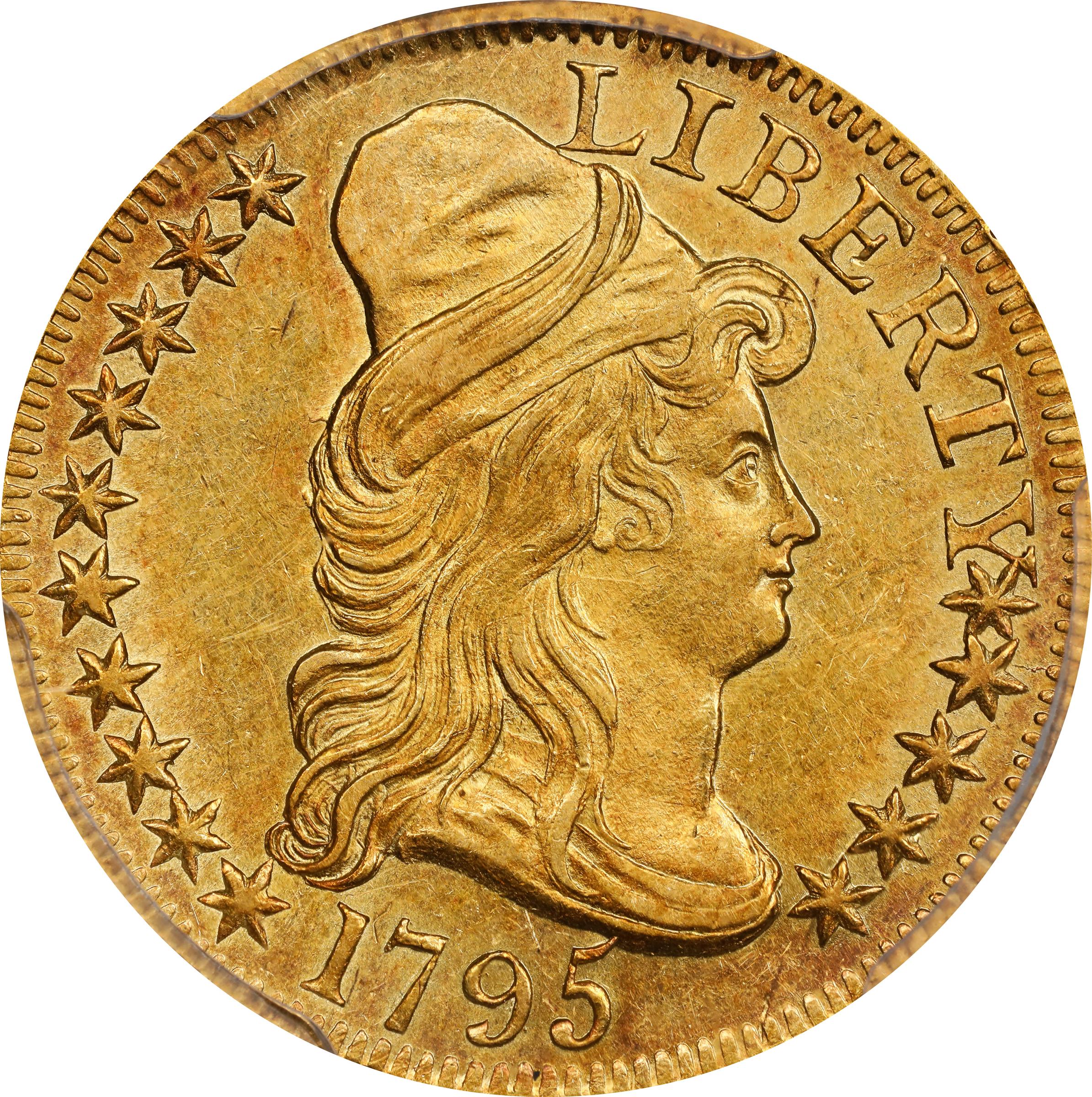
1795 $5 Small Eagle MS (PCGS#8066)
November 2025 Showcase Auction U.S. Coins
- Auctioneer
- Stack's Bowers
- Lot Number
- 3120
- Grade
- MS61
- Price
- 102,000
- Lot Description
- BD Die State c/b. Offered is a scarce Mint State example of one of the most significant and eagerly sought of all U.S. Mint gold issues. Pleasing deep honey-gold color is accented by iridescent toning in pinkish-rose. The fields are semi-reflective in finish and form a nice backdrop to satiny, boldly to sharply struck design elements. There are no sizable or otherwise individually distracting marks, and the eye appeal is superior for the grade level. The reverse is rotated approximately 45 degrees clockwise from normal coin alignment, providing further interest for variety specialists.<p>As part of the Act of April 2, 1792, that established the United States Mint and defined the nation's monetary system, gold coins in $2-1/2, $5, and $10 denominations were authorized. The law also instituted a requirement that the treasurer, chief coiner, and assayer must post a personal surety bond of $10,000 each before they could produce gold and silver coins. This was an enormous sum of money for the era which could not be met. Consequently, the first coins struck at the newly opened Philadelphia Mint were half cents and large cents. Realizing the difficulties in coming up with the surety bonds, Congress reduced the requirements enough that the production of silver coinage could commence. It would not be until 1795, three years after the authorizing act was passed, that there was enough gold bullion on hand to begin production of gold coins.<p>The work of designing and engraving the new denominations fell to Robert Scot after Joseph Wright's term as engraver was cut short when he died in one of the annual yellow fever epidemics that plagued Philadelphia. The obverse of all three gold denominations bear a representation of Liberty facing right flanked by stars and wearing a cloth freedman's cap, with the legend LIBERTY above and the date below. The reverse features a delicate small eagle with spread wings holding a wreath in its beak and clutching a palm frond in its talons. The initial delivery of the nation's first gold coins took place on July 31, 1795, when 744 half eagles were transferred to the treasurer by the chief coiner.<p>As is often the case, there were some growing pains at the new mint, in particular with extending die life. The Bass-Dannreuther reference has identified eight obverse dies and nine reverse dies used in 12 separate combinations for the 1795 Small Eagle $5 issue. Die reuse in the early days of the Mint was prevalent; a die would be kept in service until failure, often regardless of the date engraved on it. While Mint records indicate that 8,707 half eagles were delivered during calendar year 1795, it is widely believed that many more were actually struck bearing the 1795 date, possibly as many as 12,106 pieces. This common practice made annual mintage figures a poor indicator of the actual number of coins struck for many issues. With this modest beginning, the half eagle entered circulation and soon was popular in commerce, rapidly becoming the workhorse gold denomination in preference over the eagle and half eagle.<p>The BD-3 variety offered here is the most available of the known die marriages of the 1795 Small Eagle $5. About 2,000 to 3,000 coins are believed to have been struck using this die pair. That said, the mass meltings of gold coins that occurred in the 1820s and 1830s took their toll on the variety, leaving only 200 or so specimens, primarily at the AU level. Interest in the 1795 Small Eagle $5 as a collectable dates to the beginning of numismatics in America during the 1850s when Philadelphia collector and dealer J. Colvin Randall first described the different die varieties of the issue. Ever since then, the 1795 Small Eagle has remained very popular with both early gold connoisseurs and advanced type collectors. In Mint State, the issue is scarce in an absolute sense and rare relative to the demand from today's discerning numismatists.