1795/1795 50C Recut Date, 3 Leaves MS(PCGS#6053)
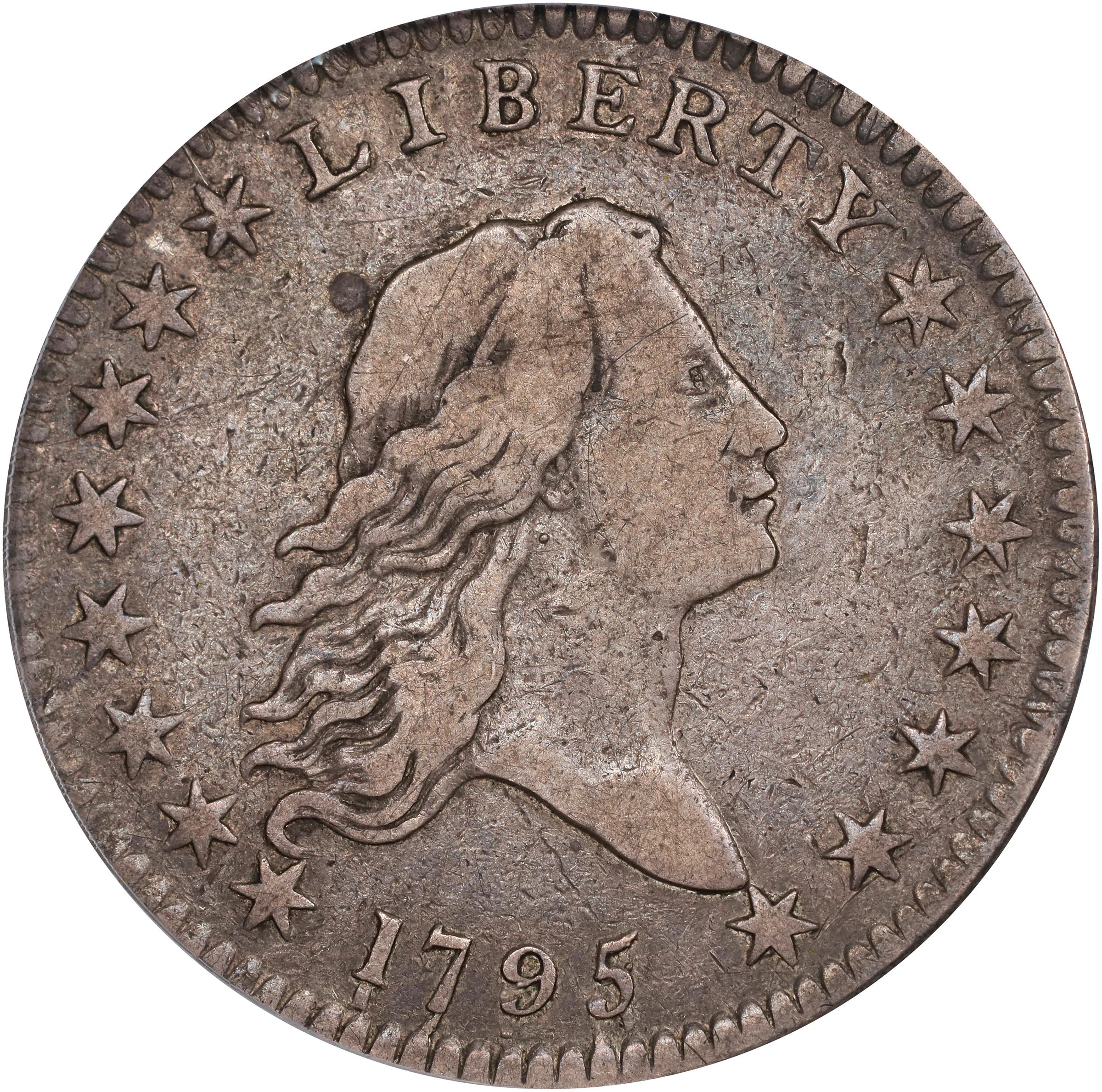
1795/1795 50C Recut Date, 3 Leaves MS (PCGS#6053)
November 2025 Showcase Auction U.S. Coins
- Auktionator
- Stack's Bowers
- Losnummer
- 2071
- Erhaltungsgrad
- VF30
- Preis
- 21.600
- Losbeschreibung
- Tompkins Die Stage 1/3. Here indeed is a great American classic, with an error die on the obverse and a rare special configuration of three leaves (instead of the usual two) on the reverse below the eagle's wings. For many years this has been a "must have" variety for the early half dollar specialist. The example offered here is medium lilac-gray in tone with deeper highlights in the protected areas. Nicely presented for the grade with none of the heavy marks that can occur after a lengthy stay in circulation. In fact, this piece holds up well to magnified scrutiny, yielding nothing more than some scattered ticks for the effort. A small obverse spot close in to the top of Liberty's head serves as the most useful identifier for tracking the provenance of this important piece.<p>Overton-111 offers a "triple treat" for collectors. By way of expansion: first, the obverse features a boldly repunched date with the first set of numerals low and nearly into the denticles, and the second set repunched immediately above in a more central area. Second, this variety also represents the only appearance of the Three Leaves reverse die. Finally, a heavy reverse die crack runs from the rim at 10 o'clock diagonally downward to the eagle's tail and probably accounts for the scarcity of the variety - it is also an easy diagnostic. This unusual crack is bi-planar in nature, somewhat like a shelf, with the surface to one side of the crack lower than on the other side.<p>The fame of this variety was recognized long ago. In the March 29, 1882 sale of a consignment from Philadelphia dealer and scholar J. Colvin Randall sold at Bangs & Co., New York City, lot 115:<p><em>1795 Very Fair. Randall No. 23. Three leaves inside of wreath and under each wing of eagle. Mr. Randall states that he has examined over 1,000 of this date and discovered only four of this variety, and knows of two others only. The rarest of the 1795 half dollars.</em><p>"Randall No. 23" refers to an attribution scheme devised by Randall, parts of which were plagiarized or at least published without credit by John W. Haseltine in his 1881 Type Table, this becoming the standard reference on half dollar die varieties prior to M.L. Beistle's 1929 opus, <em>A Register of Half Dollar Die Varieties and Sub-Varieties</em>. Being a description of each die variety used in the coinage of United States half dollars, which went on to serve as the standard reference in the series for many years, until Al C. Overton revised and updated the listing with a new book in 1967. Further concerning Randall, he is one of the most important scholars of the 19th century, but one of the least recognized today. In his auction catalog for his June 29 to July 1, 1885 sale featuring Randall material, W. Elliot Woodward noted this:<p><em>In a private letter Mr. Randall writes me: The idea of a correct work on types and varieties of United States silver dollars, halves and quarters, originated with me. H. and myself were to publish the work together, but without any consultation whatever with me, he issued for his own benefit what he styles the Type-Table Catalogue.</em><p>Randall also created a work on die varieties of early United States gold coins, from which some information was published in catalogs of his era, particularly in regard to 1795 half eagles. Dave Bowers is not aware of this study existing anywhere today.<p>In any and every numismatic season the 1795 half dollar with the Three Leaves reverse is a prized variety among early half dollar specialists. Few can equal it in terms of die interest. Originally and nicely preserved, few can equal (or even surpass) the present Choice VF example with rare and coveted CAC approval.