1794 50C O-101 MS(PCGS#39200)
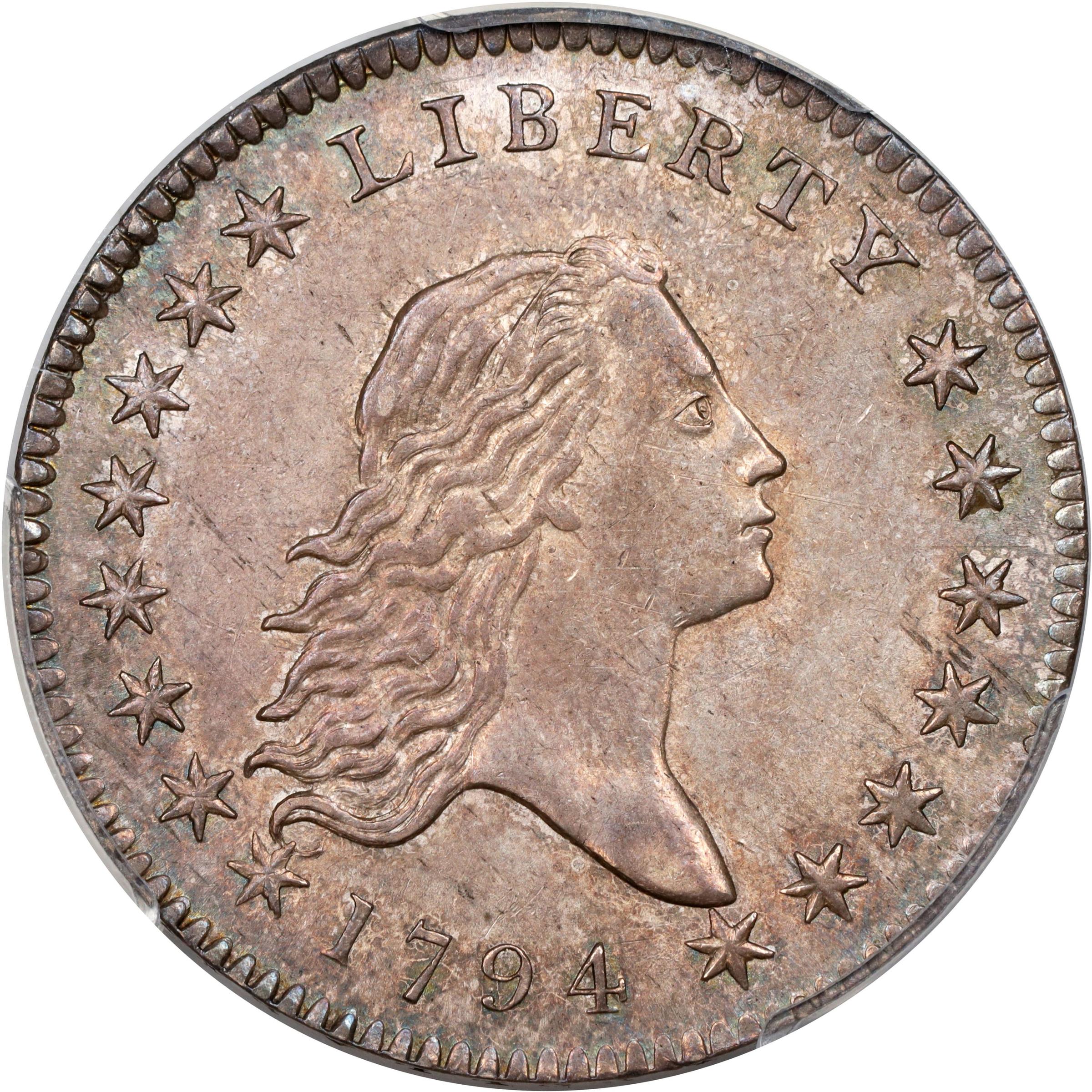
1794 50C O-101 MS (PCGS#39200)
Summer 2025 Global Showcase Auction U.S. Coins
- Auctioneer
- Stack's Bowers
- Lot Number
- 3060
- Grade
- MS61
- Price
- 264 000
- Lot Description
- Tompkins Die Stage 1/3. Offered is one of the finest, most widely known examples of this historic key date issue in the early half dollar series. When offered in our (Bowers and Merena's) April 1997 sale of the Eliasberg Collection the cataloger described it, in part, as:<p><em>Excellent with a finer than average strike. Delicate heather toning with wisps of gold. Reverse with delicate splashes of gold. A superb specimen of the first year of the denomination. Some minor adjustment marks are seen at the highest point of the center reverse and are mostly hidden in the design and toning. A small scratch is hidden in the eagle's left wing (on observer's right) and resembles an adjustment mark.</em><p>Whether one is an advanced type collector or early half dollar specialist, this is a fabulous coin that combines absolute and condition rarity into an irresistible package. It is worthy of the strongest bids.<p><em></em>While today the half dollar is seldom seen in circulation and offering one up in change will often generate odd looks and questions, it is only relatively recently that this has been the case. Half dollars have traditionally been "workhorse coins intended for use in the channels of commerce," as Q. David Bowers described them. The reduction in the required surety bonds for the chief coiner and the assayer so that production of precious metal coins could commence came late in 1794 and in this first year, 23,464 (or fewer) pieces were made, as opposed to a much larger delivery of 299,680 pieces for calendar year 1795. By that year, which was the last in which the Mint used the Flowing Hair motif in this series, the half dollar had already established itself as the denomination of choice among bullion depositors, a situation that would continue well into the 19th century.<p>Of the 11 known die marriages of the 1794 half dollar, O-101 is the most frequently encountered. This is not to imply that this is a common variety, for the 1794 as an issue is scarce to rare in all grades, irrespective of die marriage. The first half dollars struck in the United States Mint were 5,300 examples delivered on December 1, 1794. All of these coins are assumed to have been struck from 1794-dated dies. The <em>Guide Book</em>, among other numismatic references, provides a mintage figure of 23,464 pieces for this issue, as above, which assumes that the 18,164 half dollars delivered on February 4, 1795, were also coined from 1794-dated dies. This is conjecture, and we will never know for certain whether the coins delivered on February 4, 1795, were dated 1794, 1795, or both. Based on the number of die marriages known for the 1794-dated issue, as well as the number of coins extant, it is likely that at least some of the coins delivered in early 1795 were from 1794-dated dies. We suspect that the actual mintage for this issue is somewhat less than 23,464 pieces, most of which have long since been lost to commercial use.<p>The 1794 O-101 half dollar is conditionally challenging, with the vast majority of survivors well worn in grades such as VG, Fine and VF. The Condition Census as given in the 2015 reference <em>Early United States Half Dollars, Volume 1: 1794-1807</em> by Steve M. Tompkins reads: 64, 63, 61, 61, 61, 58, 58. The Eliasberg specimen is one of the MS-61 coins, and it is listed as tied for CC#2 for the early O-101 die state in the Spring 2025 revision to <em>Stephen J. Herrman's Auction & Mail Bid Prices Realized for Bust Half Dollars: 1794-1839</em>. The CC#1 coin for the 1794 O-101 attribution is the Jimmy Hayes coin that has not appeared in the market since 1985; the Pogue PCGS/CAC MS-64+ is from the O-101a die state, as is the Hawn-Queller coin in MS-63.