(1790) Church 1P Albany, New York 'D' Above, BN MS(PCGS#610)
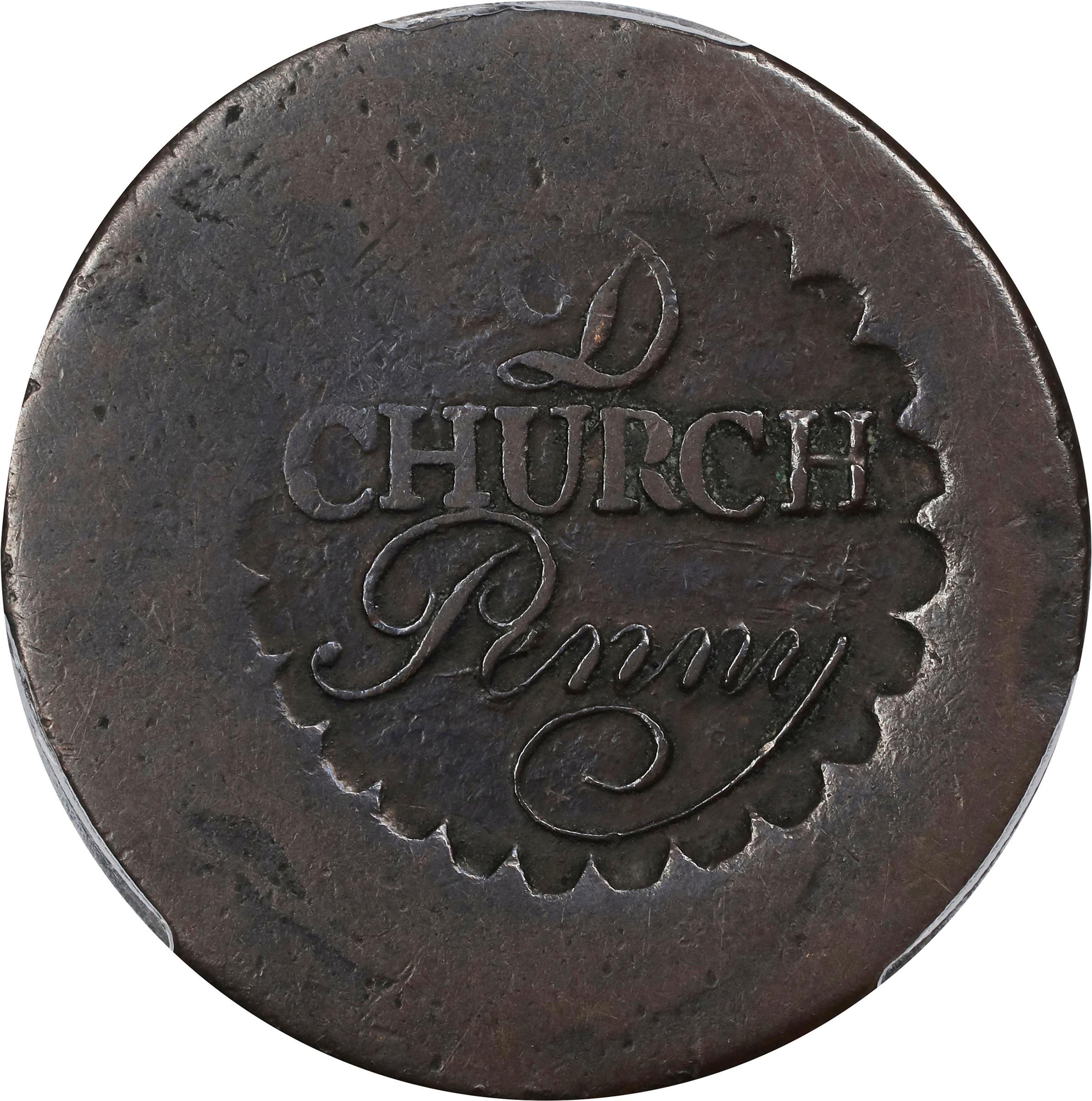
(1790) Church 1P Albany, New York 'D' Above, BN MS (PCGS#610)
November 2025 Showcase Auction U.S. Coins
- Auktionator
- Stack's Bowers
- Losnummer
- 1456
- Erhaltungsgrad
- XF40BN
- Preis
- 26.400
- Losbeschreibung
- 125.9 grains. A superb example of this classic rarity, boldly overstruck on an English halfpenny of William III. Rich chocolate brown with ideal smooth surfaces. The impression of the countermark is bold on the reverse of the well worn host, with D / Church / Penny complete and bold, as is the scalloped border everywhere but the upper left quadrant. The blank reverse is nearly perfectly smooth but for the outline of the bottom of the distinctive right-facing portrait of William III. This piece is original and perfectly choice, with just a bit of old buildup among the letters and no significant flaws anywhere. A premium piece.<p>Unsurprisingly, this is one of the finest examples of this issue we've ever offered. The highest graded certified example we've ever offered was an EF-40 (PCGS) CAC piece we sold back in March 2017 for $49,350. We sold Syd Martin's very impressively overstruck example in PCGS VF-35 in March 2023 for $50,400. Those are the only two examples of the With D variety we've sold in any grade over the last two decades. PCGS has certified only nine examples of the With D type.<p>The Albany Church pennies were communion tokens struck during the fallout of the Copper Panic of 1789, when the circulating copper medium became so engorged with counterfeit coppers, worn out pieces (like the host for this one), and miscellaneous lightweight trash that the merchants of New York City began to reject them. The number of coppers it took to equal a dollar swelled, from 90 to a dollar to twice that number. As the New York City copper coin market convulsed, the consumer economy nearby began to feel the effects of the panic as well, extending up the Hudson to Albany, down to Philadelphia, and throughout the region. Interestingly, when the assembly of the state New York began to study the copper circulating medium in 1787, pursuant to potentially issuing copper coins like their neighbors, a March 5, 1787 statement from the committee noted that the "various sorts of copper coin circulating in this state" fell into four distinct groups. First was "a few genuine British half-pence of George the Second, and some of an earlier date, the impressions of which are generally defaced." Included in this number were coins just like the host seen here: a genuine English halfpenny from nearly 100 years prior, still circulating despite the fact that its designs had been essentially worn into oblivion. The other groups cited were Irish halfpence, "pieces in imitation of British halfpence, but much lighter, of inferior copper, and badly executed," and "a very considerable number of coppers of the kind that are made in the State of New-Jersey." The Albany Church pennies are usually struck over worn-slick hosts or lightweight counterfeits. Rarely do they show so much identifiable undertype.